

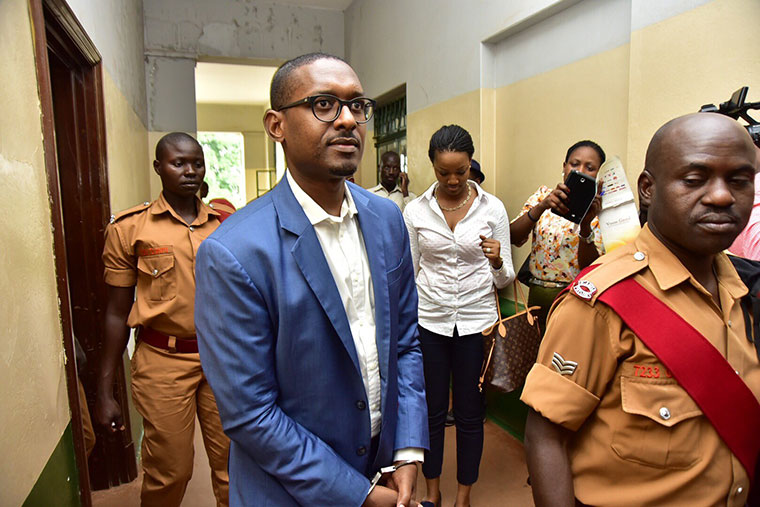
A paid social media message by convicted businessman Matthew Kanyamunyu warning Ugandans against ending up in prison during the 2026 general elections has triggered a sharp national debate over political repression, personal accountability, and the cost of civic participation, drawing a public rebuke from his aunt, UNAIDS Executive Director Winnie Byanyima.
Kanyamunyu, who was convicted in 2016 for the manslaughter of child rights activist Kenneth Akena following a road altercation in Kampala, took to X in a promoted post this week to caution Ugandans against actions that could land them in jail during the upcoming polls scheduled for January 15, 2026.
“I find myself feeling a measure of sorrow for those who will end up in jail for causing trouble during these upcoming elections,” Kanyamunyu wrote.
“It doesn’t matter who you are, the psychology and fate of a prisoner slated to spend a while there, is almost the same. I should know, I spent 5 new year’s days in (2017, 2021, 22, 23 & 24).”
Drawing from his own incarceration, he described prison as psychologically devastating, warning that fear deepens rather than fades with time.
“What incarceration does so uniquely, is raise your peculiar fear beyond the human scale, into pathology, and then stage daily life as the most cruel experiment in that fear’s endurance,” he wrote.
“And finally contrary to the myth that people adjust with time, in prison, fear consolidates and psychological injury accumulates indefinitely with ongoing catastrophic consequences.”
He ended the post with a cautionary appeal to would-be activists: “Think twice before you are used. Interrogate your aims and motivations; Nga kiki enyoo? Why hurt yourself over a losing wager?”
The post immediately provoked a backlash on X, with many users flooding Kanyamunyu’s timeline to remind him of his conviction and accusing him of moral hypocrisy.
Several critics described the message as insensitive and dismissive of Ugandans imprisoned for political reasons.
The most prominent response came from Winnie Byanyima, who said she empathised with Kanyamunyu’s pain but rejected the core message of his warning.
“Matthew, I supported you through your darkest days and I know intimately, the cruelty of prison. I’ve been there too. I respect the pain behind your words,” Byanyima wrote. “But I strongly disagree with the message you are sending.”
Byanyima drew a sharp distinction between Kanyamunyu’s imprisonment and the detention of political activists.
“Your imprisonment followed a criminal conviction. You served a sentence for a crime you pleaded guilty of. Citizens who are jailed for voting, organising, protesting, or holding dissenting political views are not ‘causing trouble’ — they are exercising constitutional rights,” she said.
“These are not, could never be, comparable situations.”
She warned that discouraging civic engagement out of fear of imprisonment risked legitimising state abuse.
“To suggest that people should withdraw from civic life to avoid prison is to normalise repression and shift responsibility from an abusive state onto its victims,” Byanyima added.
“Fear is real. Prison is brutal. But history teaches us that surrendering rights because the cost is high only guarantees more injustice, not safety.”
While criticism dominated online reactions, some users defended Kanyamunyu, pointing to his guilty plea, compensation to the victim’s family, participation in Acholi traditional reconciliation rituals, and what they described as a path of personal redemption since his release.
The public exchange has unfolded against a backdrop of heightened political tension as Uganda moves toward the 2026 elections, with opposition groups and rights organisations repeatedly raising concerns over arrests, detentions, and the use of force against political actors.
As campaigning intensifies, the controversy around Kanyamunyu’s remarks has become a flashpoint in a broader national conversation about fear, resistance, accountability, and the price Ugandans are willing — or unwilling — to pay to participate in public life.
